Photographing Red Fox
Introduction
The red fox is one of the most adaptable and widespread carnivores on the planet. It thrives in cities, on moorland, in coastal dunes, and across agricultural landscapes. As a photographic subject, it offers something few wild mammals can: the possibility of genuine proximity. Foxes that have habituated to human presence can be approached closely, and their intelligence and curiosity produce portraits with a quality of engagement that is rare in wildlife photography.
Understand the Animal
Foxes are crepuscular — most active at dawn and dusk. These are your shooting windows, and they coincide with the best light. Urban foxes may be active during daylight hours where human disturbance is low.
A fox's ears are its most expressive feature. Erect and forward means alert and interested. Swivelling means it's tracking a sound. Pinned back means submission or fear. When the ears are relaxed and the eyes are half-closed, the fox feels safe — this is your portrait window.
Look Before You Shoot
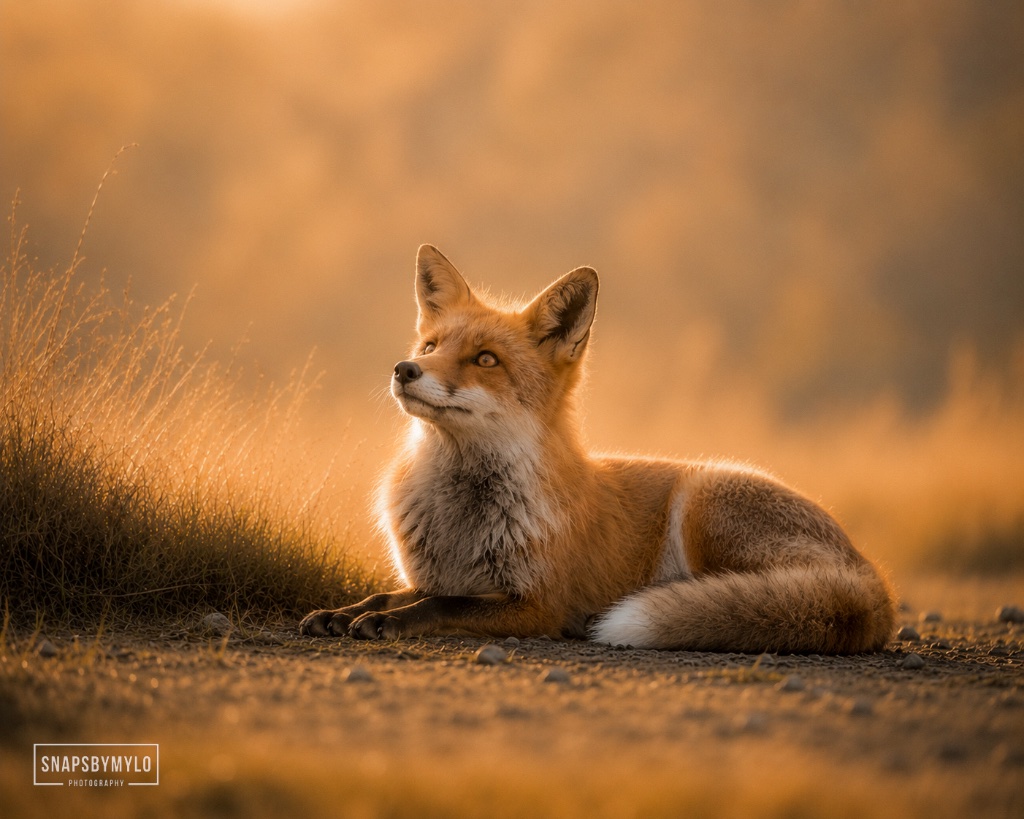
Golden hour backlight is transformative for red foxes. The rust-orange fur is semi-translucent when backlit, glowing with a warmth that front light cannot produce. Position yourself so the sun is behind the fox and expose for the face.
Eye level is non-negotiable. A fox photographed from above looks small and distant. At eye level, the fox becomes a presence — equal, engaged, real. Lie on the ground if you have to.
Composition Ideas
The Resting Portrait
Look for: A fox at rest, chin on paws, eyes half-open, bathed in warm backlight. Wait until the fox has settled and relaxed before you start shooting.
Why it works: The body language reads as comfortable, not vigilant. The backlight turns the fur into a glowing frame around the face. This is the classic fox portrait.
Environmental Storytelling
Look for: Include the context. An urban fox on a garden wall, a coastal fox on a dune, a rural fox on a stone wall.
Why it works: The environment tells the story of adaptability. A tight portrait could be anywhere; an environmental portrait says something specific about how this species lives alongside us.
The Curious Look
Look for: When a fox turns its head toward the camera with ears forward and eyes bright. Foxes are naturally curious, and this quality reads powerfully in photographs.
Why it works: Be ready for it — it's brief. The direct engagement of a curious fox looking at the camera produces an image that feels like a conversation between subject and photographer.