Photographing Zebra
Introduction
Zebras are a graphic photographer's dream. The bold black-and-white striping creates natural high-contrast patterns that can be composed in endlessly varied ways — but that same patterning is also your greatest challenge. Camera meters struggle with the extremes, autofocus can hunt on striped patterns, and composition can easily tip from striking to chaotic.
Understand the Animal
Zebras are prey animals and their body language reflects constant vigilance. Ears forward indicate interest or alertness. Ears flattened back signal irritation or aggression. When the whole herd suddenly turns in the same direction and stiffens, a predator or threat has been detected — be ready for sudden movement.
Look Before You Shoot
The black-and-white pattern will fool your meter. If the frame is dominated by white stripes, the camera will underexpose. If dominated by black, it will overexpose. Use spot metering on a mid-tone area whenever possible, or shoot in manual and check your histogram frequently.
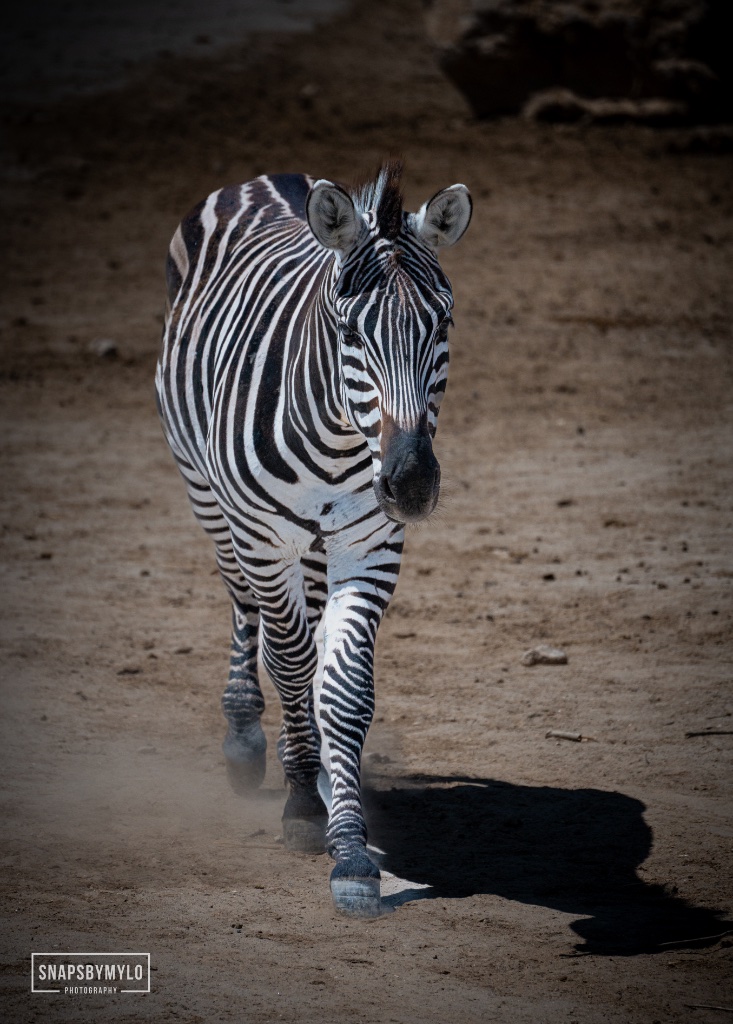
Background is critical. A zebra against clean, uncluttered ground — dry dirt, short grass, open sky — lets the graphic quality of the stripes dominate. Against busy vegetation, the pattern competes with the background and the image loses impact.
Composition Ideas
The Profile Walk
Look for: A zebra in profile, walking across a dusty path. The stripes read as graphic lines, the dust adds atmosphere.
Why it works: The side-on angle shows the full pattern and the dust adds a layer of atmosphere. Shot low to the ground for drama and separation from the background.
Abstract Pattern
Look for: Move close and fill the frame with stripes alone. No eye, no horizon — just the repeating pattern of black and white.
Why it works: This works best when the stripes curve across the frame, creating rhythm and movement from a static subject. It transforms a documentary image into a graphic one.
Herd Geometry
Look for: From a distance, a herd of zebras creates a dense, overlapping pattern of stripes that is visually mesmerising.
Why it works: Look for moments when the herd moves as a group — the chaos of crossing stripes resolves briefly into patterns and alignments that are impossible to plan.