Photographing Atlantic Puffin
Introduction
Atlantic puffins are among the most charismatic seabirds you can photograph. The oversized, brightly coloured beak, the upright posture, and the soulful expression combine to create a subject that is impossible to photograph badly — but very difficult to photograph exceptionally well. The difference lies in light, angle, and patience.
Understand the Animal
Puffins breed in large colonies on coastal cliffs and islands. They spend most of their lives at sea, coming ashore only to breed. During the breeding season, they are constantly flying between burrow and sea, bringing sand eels back for their chick — the single puffin carrying multiple fish crosswise in its beak is one of wildlife photography's most sought-after images.
Puffins are approachable on breeding islands because they are focused on their nesting cycle. Move slowly and predictably. They will tolerate a patient photographer at close range.
Look Before You Shoot
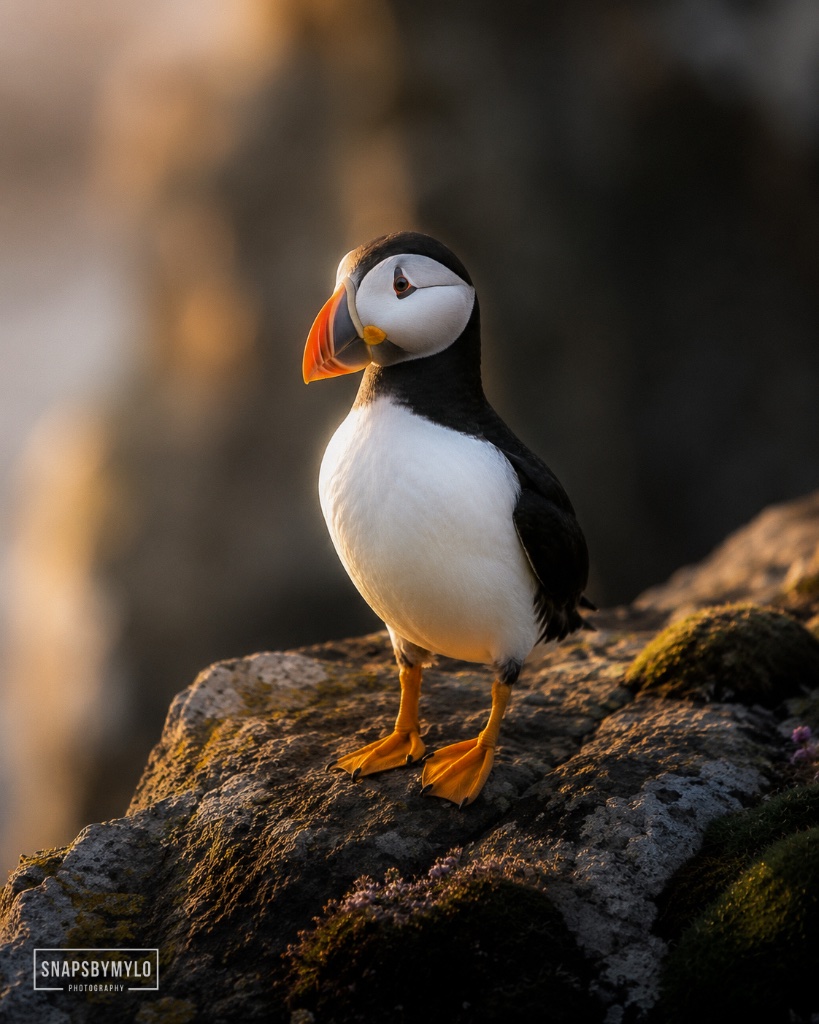
Golden-hour rim light is the definitive puffin look. Position yourself so the low sun is behind the bird. The black plumage catches a warm edge of light along its outline, the white face glows, and the beak colours intensify. This is the single most effective lighting setup for this species.
Get to eye level. Puffins stand on rocks and clifftops, and the temptation is to shoot upward. Drop to their level — the portrait changes completely when you're looking across at the bird rather than down at it.
Composition Ideas
The Classic Portrait
Look for: A puffin on a mossy rock, rim-lit at golden hour, beak slightly open, looking toward camera.
Why it works: This is the image every puffin photographer wants. The key is patience — wait for the bird to turn its head, wait for the right angle of light, and fire only when everything aligns.
Fish in Beak
Look for: A puffin returning from the sea with a beak full of sand eels. Position near a landing spot and wait for a bird to arrive.
Why it works: Shoot fast — puffins don't linger with fish, they head straight for the burrow. The multiple fish held crosswise in the beak is an extraordinary sight and a behavioural image that tells the story of the breeding cycle.
Environmental Colony
Look for: Pull back and show the colony. Hundreds of puffins dotting a cliffside, each a small dot of colour against the green grass and grey rock.
Why it works: This tells the story of a breeding community that a single portrait cannot. The scale of the colony communicates the importance of these breeding sites to the species' survival.