Photographing Black Wolf
Introduction
Black wolves are not a separate species — they are grey wolves with a genetic mutation that causes melanism. Their dark fur presents a unique photographic challenge: photographing a dark subject in a dark environment without losing detail. But when the light is right — low, directional, warm — the results are among the most striking portraits in wildlife photography.
Understand the Animal
Wolves are highly social, living in family packs with complex hierarchies. A lone wolf is usually a dispersing animal — leaving its natal pack to find a mate and territory. These individuals are more likely to be encountered in the open, as they travel widely.
When a wolf makes direct eye contact with the camera, the intensity is unmatched. Wolf eyes — particularly the pale blue or amber — carry a quality of intelligence and assessment that few other animals project.
Look Before You Shoot
Low-key lighting is your friend. Dark fur in bright light flattens into a black mass with no detail. In low, directional light — a shaft of sun through forest canopy, the last warm light of day — the texture of the fur emerges, the eyes catch the light, and the image gains depth.
You need to overexpose slightly to bring out fur detail, but watch the highlights — if the fur clips, the texture is gone. Use spot metering on the darkest part of the fur you want detail in.
Composition Ideas
The Direct Gaze
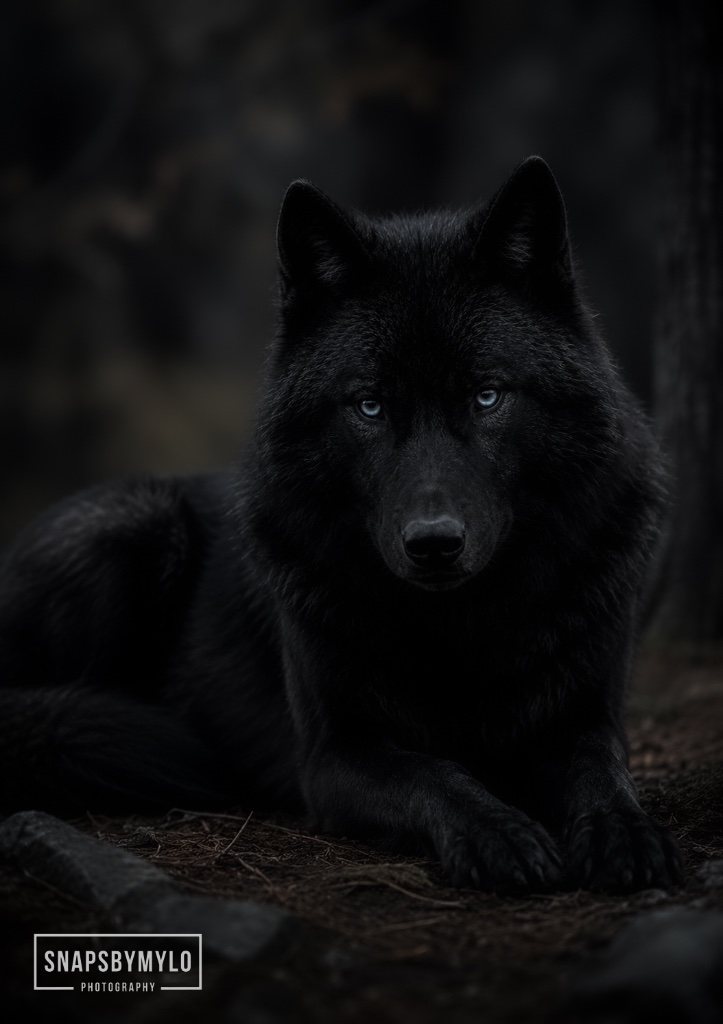
Look for: A wolf looking directly at the camera, eyes bright. Wait for it. When it comes, fire.
Why it works: The direct gaze creates a connection between viewer and subject that is impossible to achieve with any other composition. There is no image that communicates the essence of a wolf more powerfully.
Dark on Dark
Look for: A black wolf on a dark forest floor, in low directional light.
Why it works: The fur is dark, the background is dark, and the separation comes from the subtle warmth of the light catching the texture of the coat. This is low-key photography at its most demanding and rewarding.
Environmental Forest
Look for: Include the forest. A wolf in context — trees, undergrowth, dappled light.
Why it works: The dark form of the wolf emerging from or disappearing into the forest is a narrative image that tells the story of habitat and behaviour that a tight portrait cannot.